Pollination for tree fruit and soft fruit
Vital bee colonies at the right time, in the right place. In the orchard, in tunnels and under glass – in the Netherlands, Belgium and Germany.
Better fruit set, finer fruit
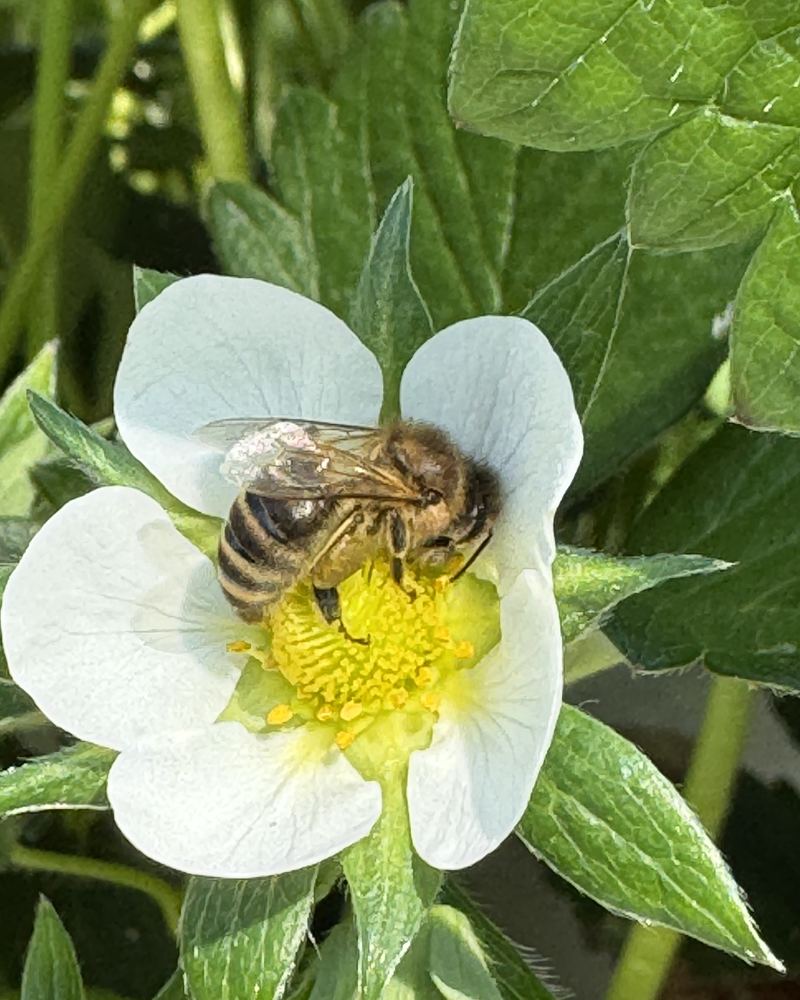
A well-pollinated flower produces better-shaped, heavier and more uniform fruit. Honeybees are indispensable here: on a good flying day a single strong colony visits countless flowers in your crop.
With hundreds of colonies available we can serve both small and large farms – flexibly, even when flowering comes earlier or later than planned.
The right colony, at the right time, in the right place.
The right approach for every crop
Tree fruit
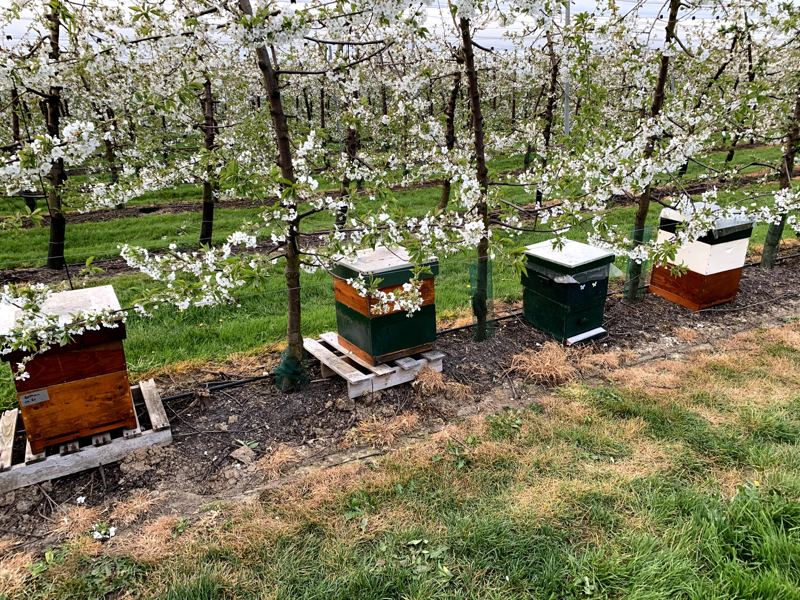
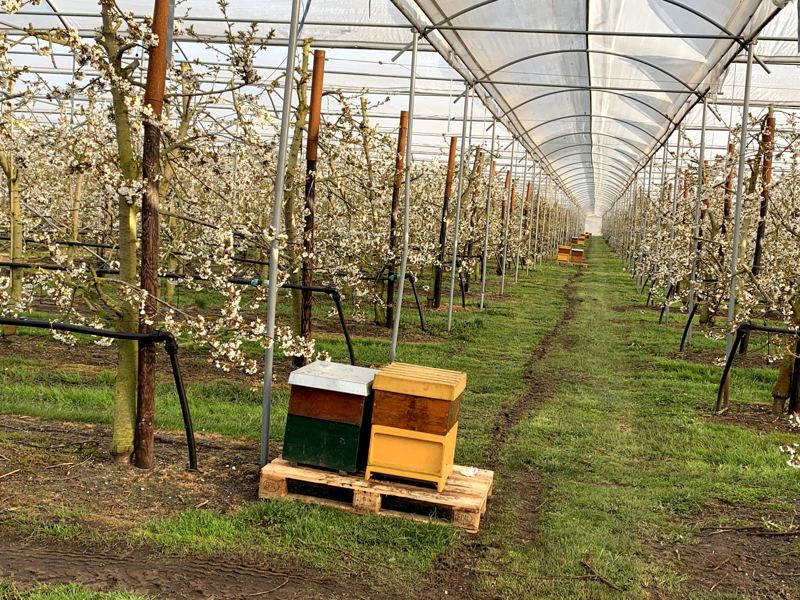
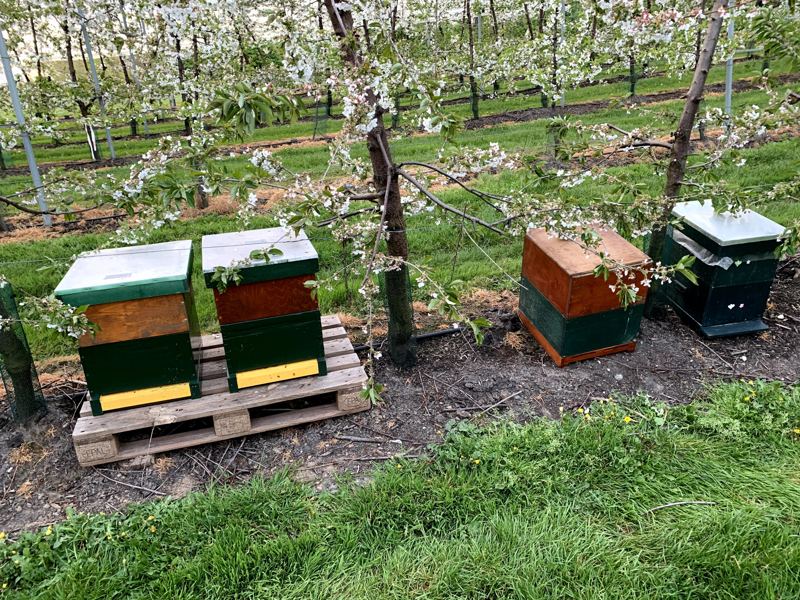
Apple, pear, cherry and plum. We match the number of colonies to variety, plot and flowering pattern.
Soft fruit
Strawberry, raspberry, red and black currant and blueberry – in open field and on table-top systems.
Under glass
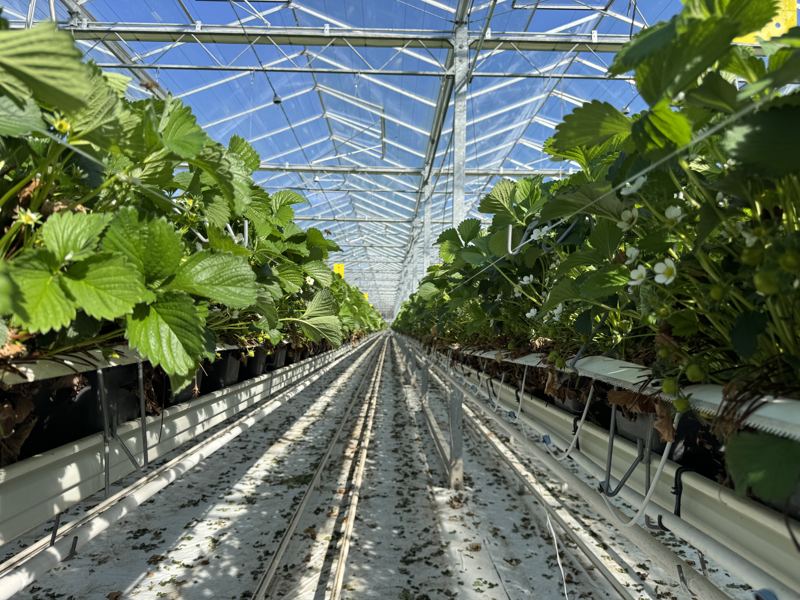
Pollination in greenhouses and tunnels all year round – including strawberries under glass in the winter months.
Own transport
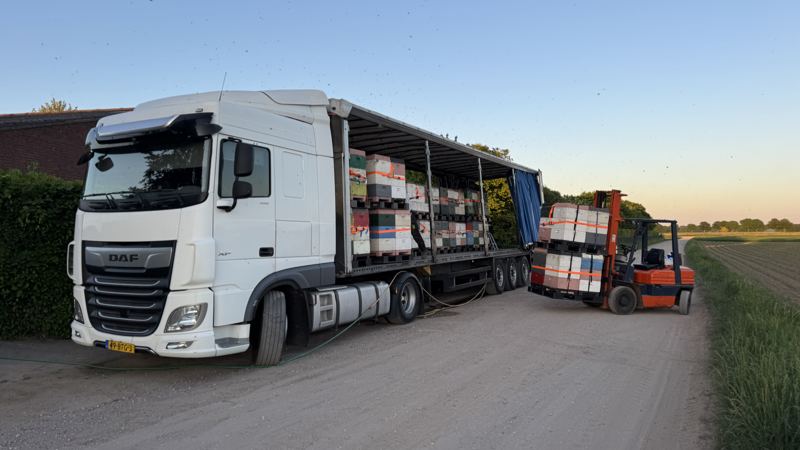
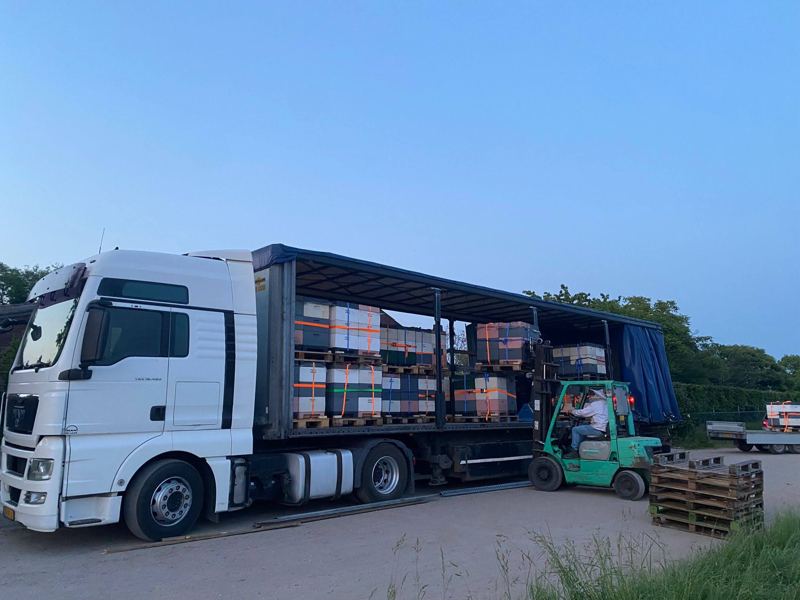
We bring the colonies to your plot on pallets with our own lorry and forklift – quickly and gently for the bees.
Healthy colonies
Vitality comes first. Our colonies are inspected and managed by an experienced bee health specialist.
Netherlands, Belgium & Germany
From Posterholt, right on the border, we serve growers in the Netherlands, Belgium and Germany.
How we work together
Request
Crop, area, location and expected flowering.
Advice & proposal
Number of colonies, placement and scheduling tailored to you.
Placement
We deliver and place the colonies at the start of flowering.
Support
Checks during flowering and coordination on crop protection.
Collection
After flowering we collect the colonies again.

Plan your pollination in good time
Contact us for advice and a no-obligation proposal. We are happy to help you decide on the number of colonies and their placement.